Questions and Answers on Yoga
What's it for?
These questions are usually asked by the lay public and are often the preferred ones of the press for educating the population.
How do I start? Is it for anyone? What are the care options?
These questions are usually asked by those who have a sincere interest in starting a program to improve quality of life.
Guidance on books, schools and instructors
These questions are often asked by people interested in studying and practicing yoga seriously.
On the operation of a yoga establishment
These questions are usually asked by people who visit a yoga school.
Vocational training
These questions are usually asked by those interested in becoming yoga teachers.
Other
A frank conversation with parents
Questions Suggested and Answered by Students
What's it for?
1. What is yoga?
Yoga is any strictly practical methodology that leads to samadhi.
This is the definition I proposed at several international congresses and which fortunately has become one of the most accepted by all types of yoga, who have considered it to be the only one that encompasses everyone's proposals.
Samadhi is the state of hyperconsciousness that can only be developed by yoga. Samadhi is far beyond meditation. To achieve this level of megalucidity, it is necessary to operate a series of metamorphoses in the biological structure of the practitioner. This requires time and health. Then, yoga itself, in its preliminary stages, provides an added health supplement for the individual to support the evolutionary impetus that will occur during the journey; and also provide the necessary time, extending life expectancy so that the yogi can, in life, reach his goal.
The effects on the internal organs, nervous and endocrine system, flexibility, strengthening, increased vitality and stress management are felt very quickly. But to awaken the energy called kundalini, develop the paranormal and achieve samadhi, it takes many years of investment with intense dedication.
Therefore, most practitioners are not interested in the goal of the thing itself (kundaliní and samádhi) but rather content with its strong and rapid effects on the body and health.
Yoga (yoga) teaches, for example, how to breathe better, how to relax, how to concentrate, how to work muscles, joints, nerves, endocrine glands, internal organs, etc. through beautiful, strong but respecting the biological rhythm of the practitioner body techniques.
» Back to index
2. Is the accent originally in the word yoga?
The accent is clearly indicated, since the letter o in Sanskrit is always long and closed. Western transliterations have conveyed that long letters should be marked with the accent. This may vary from convention to convention, but what is noted is that the circle was adopted by a renowned Indian author, Sri Purohit Swami, who wrote Yoga aphorisms (yoga) of Pátañjali in English, and also by the famous author Kastberger, who wrote the lexicon of Hindu philosophy, in castle.
For many years the accent was not applied since no one dared question this. First, who colonised India were the British who had no accents in their typographies but had a very persuasive intellectual argument that it was their powerful Navy. Secondly, Sanskrit was known very little in the West (in India they don't care at all whether transliteration to Western alphabets is correct or not). Third, there is much ideological patrol in this segment and nobody wanted to expose themselves to criticism even if they reached these same conclusions.
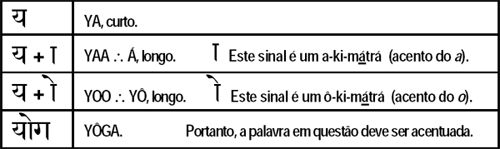
Demonstration that the word Yoga (yoga) has an accent in its original given-garí alphabet:
The Spanish language:
The following is a list of the most important works by the author.
The Bible for the English Language:
Aphorisms of Yoga, by Sri Purôhit Swámi, Faber and Faber, London.
The Bible is the book of life.
Poem by the Lord, by Vyasa, Water Clock Publisher, Lisbon.
If someone declares that the word Yoga (yoga) has no accent, ask him to show how to spell the o-ki-matra (o-ki-matra is a Hindi term currently used in India to denote the strong syllable).  ) appears in the word yoga (yoga)
 It appears immediately after the letter y (
 = ya), making it into
 The question is whether the word "o-ki-matra" means "long". If you are familiar with the subject, you should answer that it is the letter o and matra translates as an accent, pause or interval indicating a long vowel.
 ), on the other hand, has an a-ki-matra (
 ) after the letter v or w (
 = va or wa), since its accent (crase of a+a,
 = a) is in letter a.
 = go or get it).
» Back to index
3. What is the genre of the word yoga?
Male. Almost all Sanskrit words ending in the a are masculine. This should apply to the corrupt "yoga", because the rule of our language for these cases is to preserve the gender of the words that are incorporated into Portuguese.
» Back to index
4. Are yoga and "yoga" different things?
Yes, they are completely different. They are confused by the layman because of similarities in writing and pronunciation, as is the case with Aikido and Hapkido, History and history, balloonist and ballerina, couch and couch, esoteric and exoteric.
There are marked differences in the time of emergence, country of origin, proposal, methodology and type of audience.
Yoga (written always with a rounded accent, with Y pronounced closed and in the male gender) is a dynamic and beautiful technique that emerged in India over 5000 years ago. "Yoga" originated in Rio de Janeiro in the 1960s (it is documented in the book Hatha Yoga, the Science of Perfect Health, Caio Miranda, 1962, Editora Freitas Bastos, Rio de Janeiro).
» Back to index
5. Is yoga for young people? So, over 40 years old, I can't practice it?
Of course you can. You can practice at any age, actually. But if you want the truth and not the sugary version for consumer exploitation purposes, you're going to have to accept the fact that this methodology was created for young people.
Youth is a biological concept and not a chronological one. I had many young students over 60 and others older than 20. It's not a word game. Actually, it's up to you to decide whether or not you are young. And if you aren't, only you can know if that's irreversible. After all, yoga doesn't have a proposal for revitalization and relative rejuvenation?
What needs to be made clear is that yoga is not a therapy and it's not for the elderly. Yoga provides health and vitality, but if sick or elderly people try to practice it, they will have to settle for an interpretation so extremely simplified and adapted that it ends up compromising authenticity and becoming something else that can no longer be called yoga, nor has the same proposal.
Yoga is also not for children. It is for young adults 16 years and older.
» Back to index
6. Is yoga related to religion?
No, nothing. One of the clear demonstrations that yoga does not interfere with religion is the fact that Catholic universities in Brazil have been training SwáSthya Yoga instructors since the 1970s. I have had the privilege of having introduced this course and being its minister since then at almost every Catholic university from Rio Grande do Sul to North-East. In theological terms what characterizes religion is the dogma of faith.
Sam-khya is a naturalistic current and which at some historical stages has been mistakenly called materialistic and atheistic, such was its absence of mysticism! So authentic yoga (yoga) can not even feed any mysticism.
People of all religions practice yoga (yoga), including Catholic priests and nuns, Protestant pastors, Jews, Buddhists, and Shinto. This is the case with Father Harold J. Rham, who in Loyola Publishers' book That Terrible Jesuit, page 138 appears on a photo practicing sirshasana on a mattress with our logo from Yoga University (yoga) (the term university is used in the broad and archaic sense.
» Back to index
7. If yoga has no mysticism, where does all that spiritism and reincarnation concepts come from?
Yoga (yoga) does not apply such concepts. Reincarnationism and spiritualism belong to another Indian philosophy called Vedanta. Several other Indian thought streams also adopt such concepts, but not pure yoga because it has no speculative theory. Yoga (yoga) is strictly technical. Be careful: when someone proposes to talk about yoga, but addressing theoretical-speculative or doctrinal topics may be occurring erroneously or bad faith.
People confuse Vedanta with Yoga (yoga) for lack of information. This confusion is found in many books of Yoga (yoga), especially when the author is an adept of Vedanta. In fact, Yoga (yoga) has no origin affinity with Vedanta. Ancient Yoga (yoga), both Pre-Classical and Classical, was of Sámkhya line. Now, Sámkhya and Vedanta are philosophically opposed to each other, since the first is a naturalist and the second, a spiritualist.
The origin affinity of yoga (yoga) with Sámkhya (and not its opposite Vedanta) is supported in all serious literature on the subject.
The Bhagavad Gita itself, which is neither the literature of Yoga (yoga) nor Sámkhya, associates yoga (yoga) with Sámkhya, and not Vedadánta, by declaring: "Yoga is power. Sámkhya, knowledge. Whoever possesses Yoga (yoga) and Sámkhya has nothing else to gain". Even Aurelian dictionary agrees: "Yoga is the practice of Sámkhya philosophy". Excellent definition!
Yoga (yoga) and Sámkhya, together, are called sanátane dwe, meaning "the two oldest" or "the two eternal".
» Back to index
8. What about the existence of gurus in yoga?
The term guru here in the West has gained a connotation of an influential master, respected mentor, person who guides or advises (Hoaiss Dictionary). It turns out that in India, guru does not necessarily have this meaning but rather simply that of teacher of any discipline. I myself had there a music guru, language guru and philosophy guru. So the word itself is a very unpretentious term.
» Back to index
9. Is yoga a kind of gymnastics?
Yoga (yoga) is not any kind of gymnastics or any form of physical education. A complete practice of yoga includes emotional, mental, bodily, bioenergetic techniques etc., through organic procedures, respiratory, relaxation, cleansing of internal organs, vocalizations, concentration, meditation. Now this does not belong to the area of physical education. Even body techniques of yoga (yoga) are neither physical activity nor sports and are completely different from those of gymnastics. Even the rules and principles are totally different. Let's look at some examples:
1 ) MOVEMENT
• In physical education, movement and repetition are fundamental elements.
• In yoga, more than movement, it is important to remain in the critical phase of the technique and, rather than repeating the same procedure, diversification of techniques, even if they may be convergent with respect to the effects proportionate.
2 ) Accomplishment
• In physical education, proper muscle warm-up is essential to avoid congestion.
• Yoga does not involve prior warm-up, even if it is very cold; however, yoga does not involve any distances; the phenomenon is explained partly by the broad body consciousness developed by the practitioner, who knows perfectly his limits and knows that he must not exceed them, and partly by sophisticated technology developed empirically over five thousand years of experience.
It happens that when the muscle fibers are heated, they expand, giving the false impression of greater flexibility, but then they contract again by cooling off at the end of exercise.
This also physiologically underlies the proven fact that the performance achieved by the yoga practitioner (yoga) is definitely incorporated into his body heritage and he, even if he stops following a regular practice program, does not lose his good form for months or years depending on the level of progress obtained in the intensive training phase.
Thus, when a yoga practitioner is surprised by a physical incident he has an organism that is very well conditioned to react without the need for prior warm-up. Like a cat, he instantly gets into neurological and endocrine conditions to face the challenge. Then he quickly returns to calmness.
3 ) ACCURED areas
• Physical education primarily affects the muscles and joints, then the cardiovascular system, only secondarily the rest of the body. The mind is not worked out and is limited to receiving the benefit of mental hygiene, the "mens sana in corpore sano".
• In yoga, the opposite is true. The effects begin to process themselves in the deepest areas and then they spread out into the body.
4 ) Breathing
• In Physical Education, breathing is given a reasonable importance but there is no specific respiratory technology. It is enough to take deep breaths. Breathing is allowed through the mouth. Traditionally (still today) it is common for the trainer to have the athlete fill the upper chest with air to the detriment of the diaphragmatic region, which is most important because of the greater amount of air it carries.
• In yoga, one of the first things is to relearn how to breathe. Always breathe through your nostrils, except in exceptional cases. We train to electively master abdominal breathing muscles in one circumstance, intercostal muscles in another, subclavicular muscles in another and so on. We control different rhythms for different purposes, and we pair with certain respiratory techniques the contraction of this or that plexus or endocrine gland in order to dynamicise the effect of the technique.
We use 46 different respirators and some more that can't even be taught by books, such as the power they have and also because of their ability to awaken paranormal phenomena.
5 ) Energy waste
• In physical education, everything produces energy consumption without which the effects are not processed.
• In yoga, energy expenditure is close to zero in seven-eighths of the practice (seven out of eight techniques).
So the techniques of yoga are pleasant and not tiring. Even without effort, the effects occur intensely from day one.
» Back to index
10. Is Yoga better than Physical Education?
So neither is better than the other. Every yoga practitioner should do some sport and every athlete should complement Swasthya Yoga.
» Back to index
11. So can the practitioner of yoga do gymnastics, bodybuilding, dance, and martial arts?
They can and should be. These are completely independent of yoga, but we consider them good, healthy and efficient in what they aim for.
» Back to index
12. But does gymnastics harm yoga?
Some practitioners say that from the moment they started doing gymnastics, they felt that flexibility was reduced, but that doesn't seem to be a problem.
After a good stretching session, you can either do gymnastics, muscling, dance or martial arts classes and your flexibility will be preserved. Or even in the place of sports practice, let your body cool down by performing yoga asanas. It is the same thing, because "stretching" was born from yoga (yoga).
On stretching and flexibility, the illustrious Prof. Dr. Estélio Martins Dantas, former physical trainer for the Brazilian Women's Olympic Gymnastics Team, states in his article Flexibility versus Musclework published in the May/June 1985 issue of Sprint magazine, referring to the methods used in Physical Education:
"Active method . . . consists of three to four sets with ten to twenty repetitions each.
"Passive method - consisting of static positions, was inspired by yoga. In addition to being 20% more efficient than the active method (Oliveira-1980), according to De Vries, quoted by Kuntzleman (1978), 'represents less danger of tissue damage, has lower energy demand and makes prevention and/or can relieve tension and muscle pain.'
"Currently, this method is mainly used in Olympic gymnastics with extra-long stays (around 5 minutes)".
» Back to index
13. Is yoga therapy?
No. To say that yoga is therapy is the same as to say that swimming or tennis are therapies. Some people may practice tennis as "a real therapy" or swimming for asthma, but this cannot distort the true nature of tennis or swimming, which is sports.
Similarly there are those who explore yoga therapy, which is not Yoga (yoga) but a medicine system inspired by Yoga (yoga). This fact should not disfigure the identity of Yoga (yoga), which is well known as a philosophy.
For a healthy person, yoga improves his health in such a way that it constitutes an exceptional prophylaxis by eliminating future diseases even before they occur. For a practitioner who is experiencing a temporary health problem, yoga has the property of reducing vertically the intensity of the passing evil and restoring the yogi's health very quickly. However, one should not seek yoga only when one is in need.
» Back to index
14. But do not doctors recommend the practice of yoga to their patients?
Today we've seen a tendency among doctors to only recommend yoga to healthy and younger patients -- people who need exercise or manage stress, but they're not what you would call "sick".
The pre-classical yoga (the oldest) does not mention therapeutic purposes. Such references only appear there by the Middle Ages, about 4000 years after the origin of this philosophy.
It's not enough to take care of the symptoms with a limited treatment to mask each one of these manifestations. They can go away, but they come back. Or else they burst out somewhere else. It's like stress is a burglar in your house and it triggers the alarm, but you would rather turn off the alarm than treat the cause because it makes noise and annoyance. We can alleviate the symptoms as long as we also take care of the causes. This is what yoga provides us.
Teaching yoga to the sick or for the elderly would force adaptation and simplification of techniques, making them obsessively light and passive. This procedure would distance the school that did so, the young and healthy public for which our art was created and leave in its place the elderly and sick. As a final sequel, these simplified practices would not have enough power to produce the effects that yoga aims at: kundaliní and samádhi.
» Back to index
15. If so, is there any reason why the books of Yoga relate so many therapeutic effects?
Yes, they exist. To deny them would be to lie. But it must be made clear that they are side effects, road accidents and that is not what yoga proposes.
» Back to index
16. What is the purpose of yoga?
This question makes as much sense as this one: What is the use of dancing? Or, what is the use of playing golf? Or, more importantly, what is the use of playing piano or painting a picture?
You should not think of yoga in terms of "take it, give it". You should not go to yoga for benefits (neither physical nor spiritual!)
If there's something inside us that drives us to it just as it drives the artist to paint.
The end, or goal, in any type of yoga is the self-knowledge provided by samadhi. But as a pathway to achieving this state of hyperconsciousness, megalusia, SwáSthya Yoga provides a range of preliminary effects that will serve to strengthen the biological structure, increasing vitality, health, energy and longevity for the yogi to achieve the goal.
Such bodily benefits (muscle, joint, circulatory, neurological, endocrine) are nothing more than side effects, simple secondary consequences, mere crumbs falling from the main table. Whoever engages in SwáSthya Yoga by virtue of its effects is as if he had been invited to a wonderful party with beautiful people and instead of going to the reception epicenter, had stayed in the kitchen billing for the salt pans, and thinking that he was being too smart to take this "advantage".
» Back to index
17. Okay. The previous question was wrongly asked. What everyone wants to know is: what side effects of Swashthya Yoga do they have that are good for health?
Swashthya provides amazing flexibility and excellent muscle strength, with its biological techniques benefiting the spine and all organs.
Very often the beginner exclaims that soon after his first sessions he was free of a migraine that had plagued him for days, or that he had been free from an asthma that had lasted years and was resistant to all treatments, or that he was cured of a back pain attributed to some supposed spinal problem whose previous therapies only served to relieve temporarily but without definite results.
In fact, the rapid effects on ulcers, hypertension, insomnia, sexual impotence, headaches or back pain can be explained much more easily if we attribute them to stress reduction. By managing emotional, nervous and muscle tension, we can alleviate a wide range of symptoms that are just warning signs but not yet diseases in the sense of the term.
It turns out that the cost-benefit ratio of yoga (yoga) is very advantageous since, as it is not therapy but a practice, the price is considered ridiculous compared to what each practitioner has previously spent trying other resources.
How it works.
The asanas regulate weight by stimulating the thyroid, oxygenating the brain through reversed positions, body awareness, motor coordination and muscle stretching that will aid other sports.
The crya promote the internal hygiene of the mucous membranes of the stomach, intestines, jaw, bronchi, joints, etc.
The bands provide massage to the nerve plexus, endocrine glands and internal organs.
The pranayamas provide an extra share of vital energy, increase lung capacity, control emotions,
They allow the contact of the conscious with the unconscious and help to achieve mastery of smooth muscles.
Mantras, firstly, apply vibration of sounds and ultrasounds to deflate energetic meridians; secondly, they balance introversion/extroversion impulses and energize chakras; thirdly, they help calm the mental waves to achieve good concentration and meditation.
The yoganidra is the relaxation module, which assists all of the previous ones and, along with the other angles of practice, implodes stress.
Samyama (concentration, meditation and other deeper states) provides megalusiveness and self-knowledge.
These effects, and many others, are just the result of practices and procedures. They occur naturally as a result of us being exercising a healthy life philosophy. If we learn to breathe better, relax better, sleep better, eat better, excret better, exercise moderately and manifest better sexuality, the fruits can only be increased health and reduced sickness states.
The practitioner who wants benefits.
There are two types of practitioner: one who comes looking for benefits and another who comes looking for yoga. Each will find what he came looking for. For the instructor, the practitioner who wants yoga rather than personal advantages is more rewarding. This does not mean that we refuse or discriminate against the other. We simply hope to reeducate him to realize that one noble thing is yoga and another much inferior is its effects.
The practitioner who wants yoga and not merely its benefits, reads, researches, invests, devotes himself. As for the one who seeks effects, he is not concerned with the seriousness or authenticity of the method, thus encouraging in an unhealthy way the spread of teachers without training or qualification but who know how to promise benefits.
The benefit-seeking sadaka does not value the deeper studies or technical sophistication that his teacher strives to offer. He wants benefits and so does whether the method is authentic or not, as long as he can enjoy the effects. Even if they are the product of an exotic and apocryphal mixture that has nothing to do with yoga (yoga).
Now imagine another situation, a consequence of the attitude described above. Suppose you are a classical ballet teacher and each time you go to teach a more elaborate technique to make your student a true dancer rather than a mere deluder, he complains:
Oh, teacher, don't ask me that much. I'm not here to learn how to dance.
And another one:
I don't want to dance either.
And another one:
I'm not old enough to dance anymore. My doctor sent me here to treat my asthma.
In the end, you are a dance teacher, but no one wants to learn how to dance because they all have their eyes on the health benefits! What frustration! This is what systematically happens with yoga teachers.
For this reason we do not like to talk about the superlative benefits that yoga can bring.
» Back to index
18. When you stop practicing yoga, the effects cease; how long does good form go away?
You're practically not getting out of shape. The progress is incorporated into your body wealth. I've followed cases of people who stopped performing the techniques for up to ten years and good form, flexibility and musculature have been very well preserved.
Before you want to judge yoga by the parameters of physical education, remember that yoga is not physical activity or sports, it is not gymnastics or sport. It follows principles and laws quite different from physical education.
To preserve indefinitely the effects of yoga (yoga) it is only necessary that you have practiced for a reasonably long period before stopping in order to reach a good level of advance.
» Back to index
19. Is Yoga only for men?
In India, your home country, yoga is a gentleman's art. Very rarely do you find an Indian lady practicing in a school or ashram except in big centers like New Delhi. If someone asked you to quote ten Hindu yoga authors, chances are you would quote ten men and no women.
In the West, men and women practice normally, as well as they can devote themselves to karate which is another oriental art originally intended for men.
» Back to index
20. Is not yoga a gentle, very quiet mode of relaxation?
Ancient Yoga is not a kind of relaxation. It is biological, does not weary and does not agitate muscles, ligaments or vertebrae. It contains relaxation techniques but they make up only a small part. What takes up most of the time of a regular practice are other procedures such as breathing, organic techniques, concentration, mantras, meditation etc.
» Back to index
21. Should not yoga be for the Orientals only, since it was created in India and we Westerners are different?
We know that not, the same food nourishes both western and eastern alike. The same poison kills them both. The same medicine cures them both.
So, is it psychologically that we are different? Nor is there. There is no one psychology for Westerners and one for Easterners: it's one and the same for everyone.
To say that yoga doesn't work for Westerners because it was created in the East is stupid. It would be like saying that judo, karate, Kung Fu don't work for us because they were created by Easterners.
In fact, paper, silk, compass, gunpowder, pasta, chess, wheel, massage, acupuncture, mathematics, Arabic algarisms (actually Indian), the concept of zero, chemistry, astronomy, medicine... all these were created by the Orientals. Even Christianity came from the East! So we must assume that all these things are not useful to us?
To say that Easterners are different from Westerners is only a separatist pretext among human beings to justify acts of physical or moral violence against our Eastern brothers, blacks, Indians, Jews, Latinos etc. such as ghettos, colonialism, apartheid.
When ye wound us, do we not bleed? When we mock, do we not laugh? When you poison us, do we not die? If we are like you in all things, then we will also be like you.
Shakespeare, the Merchant of Venice Act III scene 1
» Back to index
22. But yoga (yoga) was created long ago and is not to serve modern man living in another cultural reality.
We could go back to the previous answer and ask if all those creations of the Orientals that came out hundreds and thousands of years ago are still up-to-date and if they're still useful to us...
But I'd rather open another door in common sense.
An ancient Greek philosopher wrote before Christ that he did not enjoy life in the big cities because of noise pollution, excessive smoking, overcrowding, congested traffic, much violence and corruption.
In the military schools, four thousand-year-old wars are studied despite technological advances in warfare, since military strategy is virtually the same to this day. History repeats itself. There is even a DeRose Sutra that says: "Two thousand years ago, the people were content with bread and circus. Today, he is content with bread au chocolat and Cirque du Soleil".
Man does not evolve so quickly and remains the same. In fact, ironically, the trunk that is making superlative success in the 21st century is just Pre-Classical: for modern man, the method that pleases most is precisely the oldest. It's called Dakshinachara-tántrika-Niríshwarasámkhya Yoga, called SwáSthya after coding.
» Back to index
23. What is Swashthya?
SwáSthya Yoga is the name of the systematization of Ancient Yoga (yoga).
SwáSthya has achieved great notability as it represents the recognition of a much more ancestral strain than Classic Yoga.
The fact is that no one ever stopped studying the early Yoga (yoga) of the Dravidian people, who flourished in Mohenjo Daro, in the Indus Valley, northwest India. Today's Hindus are descendants of the Aryan who arrived thousands of years later and subjugated the Dravids. From then on, everything related to the Dravidian culture was condemned to exclusion and oblivion.
So when we presented the first world systematization of Swasthya, there was something like a revolution in the history of yoga. The most interesting thing is that all the facts I worked on were known and published long ago in well-known works about History, Archaeology, Anthropology, Yoga (yoga), Sámkhya etc. If there was any merit it was just the fact of combining this information so that no one could deny their conclusions.
Those who try to challenge them do so through speech that is so visibly emotional and without presenting any legitimate documentation, they lose credibility.
It does not admit free questioning or bluff about this, but requires the potential challenger to present evidence, that is, a book containing the fundamental elements of our structure as we will study in the next question and with a date of publication before that of our Prothesis on Swashthya Yoga.
The oldest book we find about a yoga (yoga) possibly related to ours is called SwáSthya aur Yogásana and was published in India in the 1980s, so many years after the Prontuário de SwáSthya Yoga had had several editions in Brazil (since the 1960s) and Europe, years after this work was introduced into Indian monasteries and public libraries.
» Back to index
What is Swashthya Yoga?
Swashthya has three main characteristics:
A. its extremely complete practice, in eight modules;
B. the introduction of the concept of general implementing rules;
C. the execution of techniques (snapshots, mudras, bands etc.) forming chain or choreographic sequences.
A.
The eight-part regular practice is called ashtanga sadhana and consists of:
1. mudra (reflexive gesture made with the hands);
The Commission has also adopted a proposal for a directive on the protection of workers' rights.
3. mantra (voicing of sounds and ultrasounds);
4. pranyama (expansion of bioenergy through respirators);
5. kriyá (a cleansing activity of the mucous membranes);
6. asana (organic technique);
7. yogany (relaxation technique);
8. samyama (concentration, meditation and samadhi)
B.
With the systematization of Swasthya, for the first time in history reference to general rules of execution appears in a book of Yoga (yoga). They are rules of breathing, staying, repetition, location of consciousness and mindfulness.
C.
The first is the introduction of a new form, which was lost in the nighttime.
The first step is to create a series of connecting movements between techniques, allowing for better fluidity in a sequence that has been conventionally called choreography.
To understand better, we recommend that the reader watch the SwáSthya Company DVD of Cinematic Arts, available for free on our website www.Uni-Yoga.orgWhat you will see is a spectacle of art and beauty that transcends your most fertile imagination about the image of yoga techniques.
» Back to index
25. How has the systematization of Swashthya Yoga been carried out?
She was directly inspired by the Shashras and meditating on the work of the Masters who preceded us.
» Back to index
Does yoga not alienate? That is, does the person who does yoga not become half-alien, does not stop attending friends, does not break up with family, does not quit his job, does not stop reading newspapers and is left talking about yoga and listening to soft music?
All of the things listed in the question are symptoms of a person with personality disorders who probably needs psychiatric care.
The word yoga means unity, integration. Well, integration is the opposite of alienation. The proposal of our philosophy is to integrate man. This includes integrating him into his social, family, professional, cultural environment. The yogi is a person who is beyond and not below. To begin with, he does not behave or dress differently from others, nor draws attention to himself.
» Back to index
27. Since the yogi do not dress differently, who are those people walking in street clothes like Indians, each with a more exotic outfit?
We consider that everyone is free to dress as he pleases, but generally those who are beyond the limits of common sense or are being deceived or wanting to deceive - such people are almost always sectarian.
Attention: even if some of these movements declare that they are dedicated to Yoga (yoga), this cannot be true, since this philosophy is not sectarian and does not endorse radical ideologies or fanaticism.
What happens is that our method has a very big reputation and there are smart people who want to make money on top of it, if these people open the game and confess they belong to a sect interested in attracting followers and indoctrinating people, everyone would simply stand up for themselves and refuse catechesis. But as they say about yoga, you give them a chance and listen to what they have to say.
From now on, you know: he dressed differently, it has nothing to do with yoga. In India we dress like Indians; in Europe, as Europeans; in Brazil, as Brazilians.
» Back to index
But men who practice this method usually wear beards...
As Mark Twain said, "Every generalization is pernicious... including this one!"
The people who grow beards are not because of this ancestral tradition. For their government, Hindus do not wear beards: they wear mustaches. Those with beautiful beards are the Sikhs, but they traditionally do not do Yoga (except Western Sikhs!). Yoga is a Hindu tradition and for centuries there has been a state of animosity between Sikhs and Hindus.
» Back to index
I have heard that practitioners cannot dance, they cannot eat everything and they cannot have a full and healthy sex life.
The methodology we teach does not suppress or forbid anything. What represses is the Aryan behavioural system called brahmáchárya. After the Aryan occupation, Indians adopted brahmáchárya massively and this makes the least informed believe that everything that comes from India understands such behavior, but it's not like that. Yoga is one thing and brahmáchárya is another.
In the culture we propose there are no restrictions on people's freedom. We guide, but within respect for free will. Everyone eats what they want and makes of their sexuality what they consider most appropriate.
As for dancing, Shiva, the creator of yoga, was a dancer who had the title Natarája, "king of the dancers". In his traditional representation he appears dancing within a circle of fire and trampling on ignorance, this same ignorance that leads some people to spread erroneous conceptions about the methodology we teach.
With regard to strange or repressive attitudes, such responsibility falls much more on the fantasy of a conflicted mind and the fanaticism typical of an ill-directed practitioner.
» Back to index
So, to practice, I'm not required to be a vegetarian?
The philosophy we advocate doesn't require anything, however, all sports and even professions have a particularly recommended type of diet. Imagine if an executive could have the same diet as a stoker or vice versa. Both would earn less and have their life expectancy shortened.
Even in sports, every sport has a specific diet. For example, the runner's diet is different from that of the bodybuilder. But it's not that simple yet.
Among runners, the 100 meter-wide one feeds and the marathon runner another. The first needs to explode, has to have in his muscles nutrients capable of turning into a large amount of energy in a few seconds. The other needs that his reserves do not burn up in seconds or minutes. A slow combustion regime is needed for the marathon runner to finish the miles he set out to and have energy until the end.
In the case of weight-workers, there is also a need for specific diet for those who are involved in muscle hypertrophy and another distinct diet for those who work to define musculature.
And so on and so forth, with amazing details and subtleties. Some athletes are not taking these nutritional watermarks very seriously. As a result, we've been tracking the low income of Latin Americans at the Olympics, in front of other nations that pay more attention to the athlete's diet.
Many people say they want to embrace our culture, as long as it doesn't interfere with their habits. It turns out that everything you do seriously interferes. Whether you intend to learn a musical instrument, paint or sport, any of these things will change your habits. It will alter even the smallest details like how you talk, dress, comb or cut your nails!
The system we implement does not prohibit anything and does not force anything. You can eat everything, but if you want to take full advantage of what the method has to offer, a specific, more biological diet is recommended that provides certain nutrients needed in terms of energy amount, oxygen and fat consumption content, protein quantity/quality, vitamins and mineral salts, residue ratio left in the body, etc.
Our specific diet will be mentioned in the corresponding question. In this one, only asked if yoga compels the practitioner to become vegetarian. The answer is: it does not.
» Back to index
31. Is the food recommended natural or macrobiotic?
We recommend vegetarianism as your dietary system, but you should avoid labeling it because less educated people think that a vegetarian only eats salad (that's what a vegetarian least appreciates!) or that a vegetarian eats meat... white!
Since genuine vegetarianism is almost no different from common food, except for the absence of dead animals, we suggest that anyone interested in following such an experience should not label themselves. In any restaurant, pizza place or even barbecue, just ask for whatever you want. Never, never, ever, say the magic word
It's like when you say it, you're inviting the people to debate or cheer.
If anyone tries to discuss food with a vegetarian, albeit cordially, the right attitude is to cut it short, with all kindness. We don't want to indoctrinate anyone. But we also don't allow invasion of our privacy.
It is an unforgivable feat to invite a practitioner of our cultural tradition for a macrobiotic meal: it is nothing less than the food chain that most aggressively opposes the nutritional system of yoga.
For more information, see our book Vegetarian Food: Enough of Cabbage! and also:
The first is the "Diet of Yoga", by Edgardo Caramella, Editorial Kier.
The Vegetarian Gourmet, Rosangela de Castro, edition by the author.
» Back to index
32. What about drugs?
In this particular case, we're pretty categorical.
» Back to index
33. What is the profile of a practitioner?
Among our students there were always people of both sexes in similar proportion and people of all ages, professions, races and creeds.
1 Read our book Good Practices in Yoga, which is also for those who do not practice but want to become more polished.
In recent years our work has been increasingly sought after by students, businessmen, executives, liberal professionals, sportsmen, politicians and artists.
The age range has stabilized between 20 and 50 years old. Some people with less, some with more. As for the religions of practitioners, we have noticed that the number of adherents of all religions has grown considerably. Among Protestants we have observed a greater demand by Adventists and Baptists. Those who do not understand our philosophy and even publish defamatory material are some evangelical sects. But this explains: some are humble people who because of social injustice have been compressed into the base of the cultural pyramid.
In socio-economic terms, our personal improvement system is most sought after by the cultural classes A and B. Class C likes yoga (yoga), but few of this group practice it in specialized schools because of economic problems. On the other hand, they consume many books and CDs to practice alone.
The professions most sought after by our school are firstly engineers; then lawyers, doctors, dentists, architects, teachers of physical education, dance and martial arts.
Another trend observed in recent times has been that many entrepreneurs and executives find that our resources could help them not only manage stress, but also increase their productivity and improve their quality of life.
In decision-making and leadership positions, by controlling stress, our methodology reduced the rates of exhaustion, fraud, ulcers, gastritis, high blood pressure, heart attack, migraine and insomnia. In office staff, fighting sedentary behavior eliminated back pain, corrected some spinal problems, hemorrhoids, sleepiness after lunch and irritability that hindered human relationships between employees and stuck the administrative machine. Among workers, productivity increased by about 30 percent because it oxygenated their brains and provided them with more concentration, which reduced operational errors and accidents to almost zero. At all stages there was a significant drop in job failures due to health reasons.
Sports professionals look to us once they're benefited by increased endurance, muscle stretching, flexibility, anti-dyspnea know-how, more concentration and emotional control.
Artists have found that our resources precipitate sensitivity and creativity, including artists in the visual arts, music and even advertising, and there are a huge number of singers and television actors who practice with us, not to mention speakers who come for breathing techniques and mantra to educate their voice.
Students are interested in better utilization with fewer hours of study and in the control of the nervous system in tests. As we can see from the examples above, almost no one is interested in yoga itself. Almost everyone wants only the utilitarian benefits that constitute just its side effects, simple crumbs. Our culture is superlatively larger, more important and deeper than these little benefits.
» Back to index
34. Why do we have a wrong view of this philosophy?
Turns out we have the wrong images about almost everything.
The press, journalism, television, radio and finally all media professionals must recognize their great responsibility to public opinion and take on the good will to educate the population by doing a serious job and correcting the distorted image.
Yoga is sensational enough on its own, it doesn't need sensationalism. It's beautiful as a visual spectacle, it doesn't need the circus look.
But it would be necessary to consult only with qualified yoga instructors, and never interview laypeople who call themselves "yoga teachers" without training, for this only confuses and misleads readers or viewers.
When seeking clarification about medicine, a trained physician is interviewed and so is any profession. In the case of yoga, the press listens to curious, laypeople and adventurers rather than applying the ethical care of only conveying authoritative technical opinions. This is wrong.
» Back to index
How do I start? Is it for anyone? What are the care options?
35. What is required for practicing Swashthya Yoga?
Priority. When there is no priority you put other interests first and declare that you have no time to practice yoga (yoga). This is the case with all things. When you don't have availability for something, what you lack isn't time. You are the one who has taken your time with what was supposed to be most important. So don't say you don't have time!
» Back to index
Is Swashthya Yoga for anyone?
SwāSthya is for sensitive, educated, cultured, healthy, dynamic, disciplined, joyful and well-meaning people.
» Back to index
Should you take a bath after practice?
No, the bath should be taken before but not immediately before.
Those who leave home should bathe before leaving. Those who go straight to practice from work should try to do as much hygiene as possible before leaving their company. It is because some techniques intensify detoxification which, in turn, accelerates elimination through the pores. If you are not well cleaned, you will exhale a "smell" unpleasant to your colleagues' nostrils.
After practice, you should wait at least half an hour to take a shower because it dissipates the energy that our method aims to concentrate.
» Back to index
How long after a meal should Swashthya be practised?
Ideally, your stomach, bladder and intestines should be very empty. If that's not possible, try to practice as far away from your last meal as you can, at least three or four hours. And try to make this pre-practice meal a little light: small quantity and good quality.
Taking a day of fasting a week is revitalizing, rejuvenating, purifying, helps to keep fit, benefits pressure, reduces stomach dilation, is good for the liver, gives rest to the body, improves lucidity, enhances the sense of discipline and contributes to preventing some diseases. Well you could choose the day of your practice of Swasthya to give that rest to your internal organs.
» Back to index
39. Is it recommended to practice during menstruation?
If you are going to practice at home, through books and without a medical examination it is not advisable that there is no counsellor in the health, age and cultural habits of the practitioner.
Most practitioners and teachers practice normally during this period.
» Back to index
And for pregnant women, is there any impediment?
Pregnancy is not a disease and does not in itself prevent the practice of Swasthya. If the pregnant woman has any health problem, then yes, she will have to be studied what she can do or not do. However, medical examination is a routine required by law for all practitioners of both sexes and all ages for any modality, even if it is intelligent and biological as is the case with our method.
If the pregnant woman did not practice before pregnancy, it is advised that during the first three months of gestation she should only practice breathing, relaxation, meditation, mantras, pujas, mudras, some kriyas (nauli, no) and only the simplest asanas.
If you were already a practitioner, just go ahead and follow your doctor's and your instructor's recommendations.
In schools that use the DeRose Method we do not work with pregnant women for delivery purposes, however no one needs to stop their practice of Swathya because they are pregnant.
» Back to index
41. Can prepubescent children practice?
The ideal age to start is after 15 years of age. Generally, those who start earlier stop during adolescence. On the other hand, those who start during adolescence do not stop any longer.
Yoga (yoga) is not for children or the elderly. It is for young adults 16 years and older. However, it has already been explained that yoga can be practiced at any age.
We do not work with children and for administrative reasons we ask parents not to bring them, but if they want, they can practice at home.
» Back to index
42. What is the matter of the contraindications so much mentioned by some authors?
These authors direct their propaganda to the sick and elderly. It is natural that they are so concerned about contraindications. We work with another, young and healthy audience, so we do not need to emphasize this topic. Furthermore, compulsory medical examination already defines satisfactorily what each one can or cannot perform.
However, the contraindications mentioned in a previous work remain perfectly valid for those who wish to practice at home.
» Back to index
43. How many times a week should you practice?
How many times a week should you practice piano or ballet or Jiu-jitsu or anything else that you want to take seriously and make concrete progress?
If you are not available to practice daily in a yoga school, supplement with a few hours at home through audio and DVD recordings.
» Back to index
44. How much time per day should one practice?
In the establishments accredited by this author, sessions are 55 minutes. At home you should practice a time compatible with the advance you want. At first, a few minutes per day, gradually increasing to the desired limit. As in any art or sport you can have small, medium or large aspirations. The time invested must be directly proportional to your claims.
For example, many people have their work, their family and still get time to devote to tennis or English. As we said, it's a matter of priority. If you are content to be an amateur tennis player just to exercise your sedentary body a little bit, then on weekends you will almost always spend a few minutes in the courtyard. With piano lessons, the same thing. After work, twice a week you can go to the music teacher to play to extract imperfect sounds from that noble instrument. Now if you want to be a true pianist, a musician, you should train at least seven hours a day as everyone knows. Ballet. Yogga (yoga) too.
Eight minutes a day
However, if you do not want to become an excellent practitioner and do not aspire to the outstanding achievements that our method can provide, if you just want to keep fit and produce beneficial effects on the body and stress, the minimum daily practice time is eight minutes. That's right: only eight minutes a day is enough. So it is the ideal discipline for very busy people who are, precisely for this reason, sedentary and stressed, needing then to pay attention to their spine, their lungs, their circulation, their muscles.
Guidance on books, schools and instructors.
» Back to index
45. What are the best books on the subject?
A: The best books are those that teach ancient yoga. They're the ones that don't make attempts at assimilation or indoctrination into sects, religions and ideologies.
Get to the bookstore right away with a list of books you want to buy and don't let them push you into anything else, much less that title that "is selling very well".
Resist the temptation to read anything heroically just because it's this philosophy or some supposedly similar subject. It's better to re-read a good book over and over than to read several new books of poor quality. And, we agree, with a bibliography as good and extensive as the one we recommend, you don't have to go out spending your time and money on books that could harm not only your culture but also your mental health. See the Yoga Treatise, on our list of 50 recommended books by various authors and different modalities.
» Back to index
46. Where can you find good books on the subject?
The bibliography is more readily available in specialized bookstores. Many provide books by post and can be sent to your city. There are also some websites that can provide the books and deliver them at home, such as:
www.yogabooks.com.br (Brasil)
www.portaldeyoga.com.br (Brasil)
www.mundodoyoga.com.br (Brasil)
www.universoyoga.org.br (Brasil)
www.tudosobreyoga.org (Portugal)
www.yoga.online.pt (Portugal)
www.yogaabasto.com.ar (Argentina)
www.federaciondeyoga.org.ar (Argentina)
» Back to index
47. Should one read any book that seems to have something to do with this philosophy or similar subjects?
Reading anything that comes into your hands just because it's supposedly our philosophy or another art or science you assume is related, is a dispersed behavior.
Unfortunately, most books on yoga and similar that are marketed are dishonest. Reading them is more harmful than it helps. It's better to know nothing than think you know!
» Back to index
48. How do you know which books are not recommended?
Unadvised are books written by laymen who teach a distorted view and wrong ideas out of ignorance of the author, for anyone can publish a book if the publisher thinks it will sell well.
The book is written by psychotic personalities who often instill in the reader conflicts and distortions of behavior, for example by preaching that
Everything is an illusion or that sexuality, beauty, money etc. are reprehensible.
Also unadvised are books that, under the guise of universalism or 'rolistry', create hybrids by mixing up incompatible things and offering the reader an apocryphal blend that will not lead him anywhere but which will surely bring disastrous consequences for his health and mental balance.
We can't generalize, but some symptoms are as follows:
(a) Any reference to sexual repression makes the book potentially suspicious because it is through sexual repression that certain ideologies manage to manipulate people.
(b) Another sign that a book may not be serious is the fact that the author shows himself to the reader as a very spiritual, good and understanding person, talking about God too often.
c) In practice, one of the characteristics that a book is not reliable is that it makes reversals over its head using the wall as a support. The dangerous thing is just the wall. Nature is wise. If you are unable to perform the stop over your head Mother Nature will prevent you from executing the technique by causing it to fall and stay safe... on the floor! But if there is a wall behind you, you won't be able to fall. You will be artificially held in this support even without any condition or health. This has caused problems in the cervical spine and more serious injuries in older or sick people who have read this guidance in a seemingly well-respected book and practiced it at home alone without a medical examination.
What does the professor think of the books in...
It is not cordial on the part of the student to present questions that may lead us to give some unfavorable opinion about this or that author, even if he is not a yoga practitioner.
» Back to index
50. Who can teach?
Legally and morally, this methodology can only be taught by those who have taken a Teacher Training Course and have been approved by the Federation of their state. Unless they are one of the few veterans with the Teacher's Handbook issued in the 1960s by the extinct Guanabara State Education Secretary.
Today, the only certificate that is valid before the National Yoga Union (yoga) is the unified document jointly issued by the University of Yoga (yoga) (the term University is used in a broad and archaic sense. We do not have a 3rd degree course.) in agreement with a Federal, State or Catholic University. In addition to legal validity, this certificate has the advantage of requiring a revalidation exam that must be given every year. This preserves the updating and technical excellence of the instructor.
If the teacher has this type of certificate, he is proud to have earned it and will post it in a well-visible place at his workplace.
» Back to index
51. How much is it paid to practice in a good establishment?
The teacher is usually charged approximately what a doctor charges for an appointment, taking into account the same socioeconomic group. If less, don't be suspicious.
Apart from this, there is a standard suggested by the National Yoga Union (yoga), and accepted by the Yoga Federations (yoga) that regulates a value called a standard monthly fee (MP$). MP$ exists to allow an indexed assessment of the actual costs of the instructor in order to exercise his profession. For example, if his rent is equivalent to 20 MP$, he already knows that he will need twenty enrolled just to pay for his workplace, and so on.
The standard is not expensive. Any language course, computer science, music, painting, costs more.
The MP$ is considered the least important to allow honest performance of the profession.
An instructor who pays less than the standard has no financial means to pay for his improvement through courses, congresses, books, travels, membership of a class entity, payment to the supervisor etc. By lowering his price, he will lower his level and indirectly, he will be forcing others to lower themselves also because of a market issue. This hurts everyone and the main disadvantaged is the consumer who will buy a cheap product, therefore compatible with the price in terms of quality.
» Back to index
52. How to find a good school?
Finding a good establishment is not easy, so the National Yoga Union (yoga) maintains an Information Centre to provide accredited addresses with the Union, including recognized federations and legally valid vocational training courses.
The telephone numbers of the Central Office are (11) 3064-3949 and 3082-4514; www.Uni-Yoga.org.
The website of the University of Yoga (the term university is used in a broad and archaic sense. We don't have a third-grade course.) doesn't sell anythingI 'm sorry . But it contains an unimaginable amount of information and instruction - both theoretical and practical - about Ancient Yoga.
The website allows free downloads of several books in Portuguese, Spanish, Italian and German (shortly also in French and English), MP3 of various CDs with practical lessons from SwáSthya in Portuguese and Spanish, emotional reprogramming, meditation, mantras, music, messages etc.
We have more than 60 recorded classes availableIt is the only yoga website with these features.
We give out the addresses of over a thousand instructors free of charge of all types of yoga (yoga), yoga, yoga and yoga available in Brazil.
» Back to index
On the operation of a yoga establishment
53. What is the reason for requiring a medical certificate?
We don't accept medical certificates. What we require is that a medical examination should be done on the very medical record that schools provide. It's a quick and simple exam, which any qualified physician of any specialty is entitled to complete.
Medical assessment is a requirement of the law. Legalised establishments cannot allow entry of practitioners into even the first class without meeting this requirement.
With the spread of health insurance, anyone has a few hundred free doctors close to their place of work or residence.
However, we recommend that you seek a doctor appointed by the Yoga Center (yoga) or a private physician. It turns out that some doctors from cheaper companies, clubs and agreements often refuse to fill out the form because they are not earning enough from the consultation to compensate for their lost time.
If a candidate is making it difficult for him to undergo medical examination, he will report that such behavior on a person with social adjustment problems.
» Back to index
54. Who cannot practice for health reasons?
The question is not to prevent the practice but to know what the person concerned may and cannot practice.
A person who had simultaneously heart, respiratory, spinal, hypertensive, herniated, ulceral problems and was also paraplegic could practice breathing, relaxation, concentration, meditation, mudras, mantras, puja, etc.
Therefore, there is no possibility of a contraindication to the practice of the method.
» Back to index
55. What is the reason for taking off your shoes to enter the practice room?
You're gonna lie down and put your face on the drill room liner, so it should be as clean as your bed.
Consequently, practitioners should not walk barefoot through the premises, otherwise they would have to remove their feet to enter the classroom.
If you see someone walking barefoot in your school or association, alert your classmate not to enter the classroom again. Either wash your feet, or put on socks, or go home.
If you feel embarrassed to tell your colleague, open the book and show him this answer, for in that case we would be giving you this instruction.
» Back to index
56. Is it really necessary to use Sanskrit to designate techniques?
Sanskrit is the technical language of yoga. It is necessary to respect the roots of this millennial philosophy. No one questions when you use Japanese for judo, Chinese for kung fu, French for ballet, Italian for music, English for surfing, Latin for advocacy.
Does anyone translate habeas corpus for having your body? or pass-de-duce for pass-de-duce? Or even piano for being too slow?
» Back to index
57. What activities does a good establishment usually offer?
Courses
The main activity of a good institution is the promotion of courses and events.
Courses may be taught by the Head of the institution or by invited instructors from other cities, states and countries provided they belong to the same tradition and are authorised by their respective Master.
Courses can be of breathing, organic techniques, meditation, mantra, mudra, kriya, concentration, stress management, biological nutrition, chakra theory and many others, without extrapolating the parameters of the lineage followed by the host entity.
For the sake of seriousness and ethics, one should not perpetrate blending with other supposedly similar disciplines. We will not contribute to widespread confusion. A serious entity of yoga does not mess around with courses in massage, tai chi, crystals, floral, tarot, or any other discipline, no matter how better or more recommended that other may be, apart from yoga.
Social, recreational and cultural encounters
It is commendable to promote social, recreational and cultural gatherings such as dinners, teas, parties and meetings with any justification, strictly for the members of the community and their guests.
We need to live with each other more to realize how our audience is much happier and funnier than poor mortals without drinking a drop of alcohol.
Moreover, it is these social encounters that have given rise to the most fruitful affective relationships in our history. It is very important that the adherents of our culture are able to relate affectively to each other because they have much more dialogue and much more exchanges to carry out. When marriages between yogis take place, yoga (yoga) begins to dwell in their hearts forever.
Specific groups
An association or school of yoga (yoga) also offers specific enhancement in the most important areas such as: Study Group, Choreography Group, Meditation Group, Reading Circle, Mantra Choir and Preparation Seminar for Future Teachers. These are activities that motivate students and contribute to their loyalty as well as to better represent the image of their Cultural Space.
The Commission has also adopted a proposal for a regulation on the
This is the main objective of our work. Our goal is to spread the philosophy we advocate.
An honest professional recognizes this and understands that each trained instructor will allow us to expand the teaching as an opinion-forming, multiplier factor.
Books and Videos
A good institution is a pole of cultural expansion and spreads our message by providing educational materials, such as books and audio-recorded classes and DVDs, as well as all the supplies that can contribute to the practitioner becoming more integrated into our school.
The Commission has also adopted a proposal for a regulation on the protection of workers' rights.
Finally, a good establishment even has regular practices for beginners who do not want to become teachers but only wish to practice.
» Back to index
Vocational training
I can become an instructor, but I'm just a beginner!
And it's great that you're a beginner, because this way you'll start right and free of vices.
» Back to index
59. How do I start my vocational training?
If you are able to attend a school or association accredited by the University of Yoga (the term University is used in the broad and archaic sense. We do not have a 3rd grade course), you will receive the best guidance directly from highly trained teachers.
If you cannot attend our live classes, study at home for our books, CDs and the Basic Course on Video/DVD. Most of this teaching material is available free of charge at www.DeRose.org.br
» Back to index
If I become a teacher will I be able to participate in the work of the University of Yoga (the term University is used in the broad and archaic sense. We do not have a third-grade course.)? And can I later become accredited from the Uni-Yoga?
Our network of schools and affiliated associations is constantly expanding, so we are always in need of new teachers in various cities and even other countries.
Complete this information with the clarifications in the next chapter.
» Back to index
I am also a father and understand your concern about the future of your son or daughter, which is why I wrote this booklet to try to clarify the main concerns of those whose children have decided to pursue our career.
I would like you to view this text as a frank and open conversation about the risks and compensation of that decision, as well as advice for parents and children on how to deal with such an undertaking.
I want to make it very clear that I am referring to the DeRose method, which is an extremely serious, technical and professional method.
From the reading of this book I will be at your disposal to supplement any clarification that may prove necessary.
I hope that this text will help both informatively and affectionately, for it is what the girl needs most. It is often because of the lack of these two factors that many young people end up engaging in harmful friendships or with lustful sects.
I want you to count on me as an ally in your commitment to seeking the best for your son or daughter, and I put my advice at your disposal, as I soon celebrate half a century of teaching and during those decades I have led many people to professional success.
DeRose
Advisor to the Order of Brazilian Parliamentarians.
Doctor Honoris Causa by various cultural and humanitarian entities.
Commander of the Brazilian Academy of Art, Culture and History.
Commander and Notorious Sage in Yoga (yoga) by the Brazilian Society of Education and Integration.
» Back to index
Questions about the profession
61. My son was studying engineering and decided to become a yoga instructor.
First of all, I don't think you should worry about this right from the start. It may be just a momentary impulse. We were young too and we know that changing our minds is a youthful privilege. If the older ones let go of the aspiration of the younger one, he will stand up and push his decision to the limits, only to oppose it. I was like that, so were you. Just say no to generate a defensive and start a war. The best thing to do is give him time.
» Back to index
What if he persists in the idea?
In this case, there is nothing that a good conversation does not solve. Parents and children need to talk. They need to be friends. They need to trust each other. You need to talk to them to check why they made that decision. If it was a mature decision, the fruit of an authentic vocation, then it's up to us as elders to provide advice and support.
» Back to index
But I want him to graduate in engineering, medicine or law.
Nothing against these professions, however, we cannot fail to take into account that the personal accomplishment of his son is worth more than the satisfaction of our conveniences. If he studies what the father desires out of obedience alone, he will surely become a frustrated person.
» Back to index
64. Traditional careers have status and are respected by society.
But it's also much more expensive to get training, and then the likelihood is that most will be unemployed because the job market has been saturated for over two decades.
As for the status, in our profession, the young man will teach engineers, doctors, lawyers, architects, psychologists, entrepreneurs, executives, intellectuals, politicians and artists. He will be treated with reverence and admiration. He will give courses at universities. He will travel across the country and abroad. He will do interviews for newspapers and television. He will write books. There is no doubt that you can earn community respect by being a DeRose Method instructor.
» Back to index
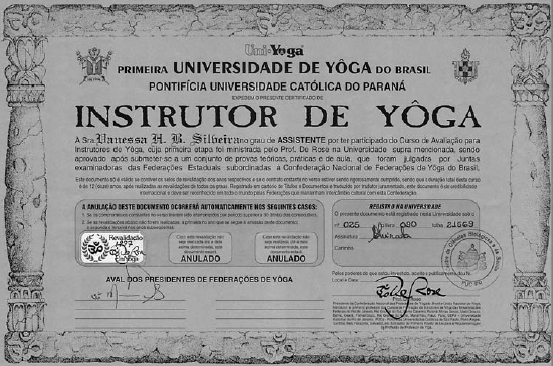
We need to think about the future, we need to study and have a certificate.
He will have a certificate issued by a Federal, State, Catholic or other private university of his choice.
On the following page, we reproduce the certificate issued in agreement with PUC - Pontifical Catholic University.
» Back to index
66. What about the socioeconomic level?
If you visit the schools accredited by our method, you will find that many of their principals have become entrepreneurs early on and have excellent facilities. You will find that they work with a class A audience. Consulting these instructors can help you feel at ease about the opportunities that our profession provides.
» Back to index
67. What economic viability does a career provide?
The viability is great and it's a fact. Consider that each client of your child pays you monthly what he's paying today to graduate. If he has 50 students, the monthly return will be 50 times the investment. This investment will be made for a few months, but the return will be lifelong.
The return is quick and expressive. However, let's be honest, it all depends on the vocation, talent and personal effort of the instructor. If he does not work hard, no one can do a miracle for him. And this applies to any profession.
Your child can also create a product and supply it to the entire network, which is very large. We now have hundreds of subsidiaries in Brazil, Argentina, Chile, Portugal, Spain, France, England, Scotland, Germany, Italy, Poland, Australia, Hawaii, Indonesia and the United States.
» Back to index
68. Are there any concrete cases of the economic viability of the profession?
The following professionals have acquired their own homes: Dora Santos (São Bernardo, SP); Miriam Rodeguer (Rio Claro, SP); Rafael Nishnig (Porto Alegre, RS), Antônio Ferreira (Salvador, BA); Clélio Berti (Campinas, SP); Naiana Alberti (Porto Alegre, RS); Maria Cruz (Belém, PA); Carla Mader (Itu, SP); Fabiano Gomes (Porto Alegre, RS); Edgardo Caramella (Buenos Aires, Argentina), Fábio Euksu (São Paulo, SP); Isabel Aguiar (Rio de Janeiro, RJ); Solange Macagnan (Cala Alta, RS); Rosa Apinosa (Porto Alegre, RS); and others; Yazan Barzato (Argentina, RS);
» Back to index
How long before my son starts making money?
In our training your child can enter the labour market as a supervised assistant in his first year of study, and thus the study itself will start to pay for itself.
» Back to index
70. How is the labour market in the area of yoga?
The market is hungry for professionals and it absorbs them immediately.
» Back to index
What is the probability that my son will be contracted to a firm affiliated with Uni-Yoga?
The probability is ninety percent (unless he doesn't want to) because we are growing a lot and the public demand for professionals in our area is increasing.
» Back to index
What if no Uni-Yoga affiliate company invites him or he doesn't want to work on the accredited network?
In this case, you can give lessons, courses and workshops in companies, clubs or academies.
» Back to index
What is the investment in setting up your own company?
The investment is very small because we do not need to capitalise on machines and equipment, as would be the case for a gym or clinic. We do not have to pay for maintenance of these equipment and replacement from time to time.
We only need the basic things, such as telephone, fax, computer, air conditioning, sound equipment. However, all of this can be acquired as work develops and produces revenue.
» Back to index
I want him to first graduate in Engineering, Law or Medicine. Then if he wants, he can study Yoga (yoga).
Would it make sense for him to spend so much money, time and sacrifice on graduating in dentistry or architecture and then go to work in advertising or computer science? Why waste all that money and youth if he's not going to practice the profession? Of course if this makes his child's life happier, after his professional training we will welcome him with open arms.
» Back to index
But what is yoga, after all?
Yoga is a set of techniques that teach how to better manage health, vitality and life expectancy.
» Back to index
The point is, I don't know who you are.
We are a serious institution that has been on the market since 1975 and DeRose since 1960. We have highly trained instructors in university extension courses at Federal, State and Catholic universities of various states in Brazil and in universities in other countries. Today our work is represented in France, England, Portugal, Spain, Italy, Germany, Poland, Scotland, United States, Hawaii, Indonesia, Argentina, Chile and several others.
» Back to index
77. And what are your lifestyle habits?
Our students and professionals learn to value health, hygiene and good manners so that they don't smoke, drink alcohol or use drugs. In fact, we are the only cultural segment where you can be sure your child will not come into contact with drugs! Yet we are an extremely cheerful and relaxed cultural community.
» Back to index
What kind of public will my son deal with?
Our clients are Class A and B, most of them between 20 and 50 years old. They're educated, well-educated and healthy people.
It's a much more selective audience than most professions.
» Back to index
What is the University of Yoga (yoga)? (the term university is used in a broad and archaic sense. We don't have a third-grade course.)
The first Brazilian University of Yoga (yoga) and International University of Yoga (yoga) are social reasons for duly registered entities.

» Back to index
80. Why are the Certificates of Yoga University (yoga) (the term university is used in a broad and archaic sense. We do not have a third degree course.) issued jointly with a Federal, State, Catholic or other university?
The Yoga (yoga) teacher training courses as a university extension in the Federal Universities have existed since the 1970s. Nobody has ever heard of it. The University of Yoga (yoga) (the term University is used in the broad and archaic sense. We do not have a 3rd grade course.) received its registration in 1994.
Since no one knew about the University of Yoga (yoga), which constituted a new concept, we decided that during the first years of our work most courses would be conducted in agreement with an older and therefore better known university. We gave preference to the Federal and State so that no one questioned the validity of the Certificates issued, registered in their pro-extension rectories. Catholic universities were also chosen for the seriousness of their work, to make it clear that our profession has no religious background and at the same time demonstrate that Catholicism feeds no reservation regarding our work. Finally, in recent years, we have admitted to associate our name with the best private universities as well.
» Back to index






